
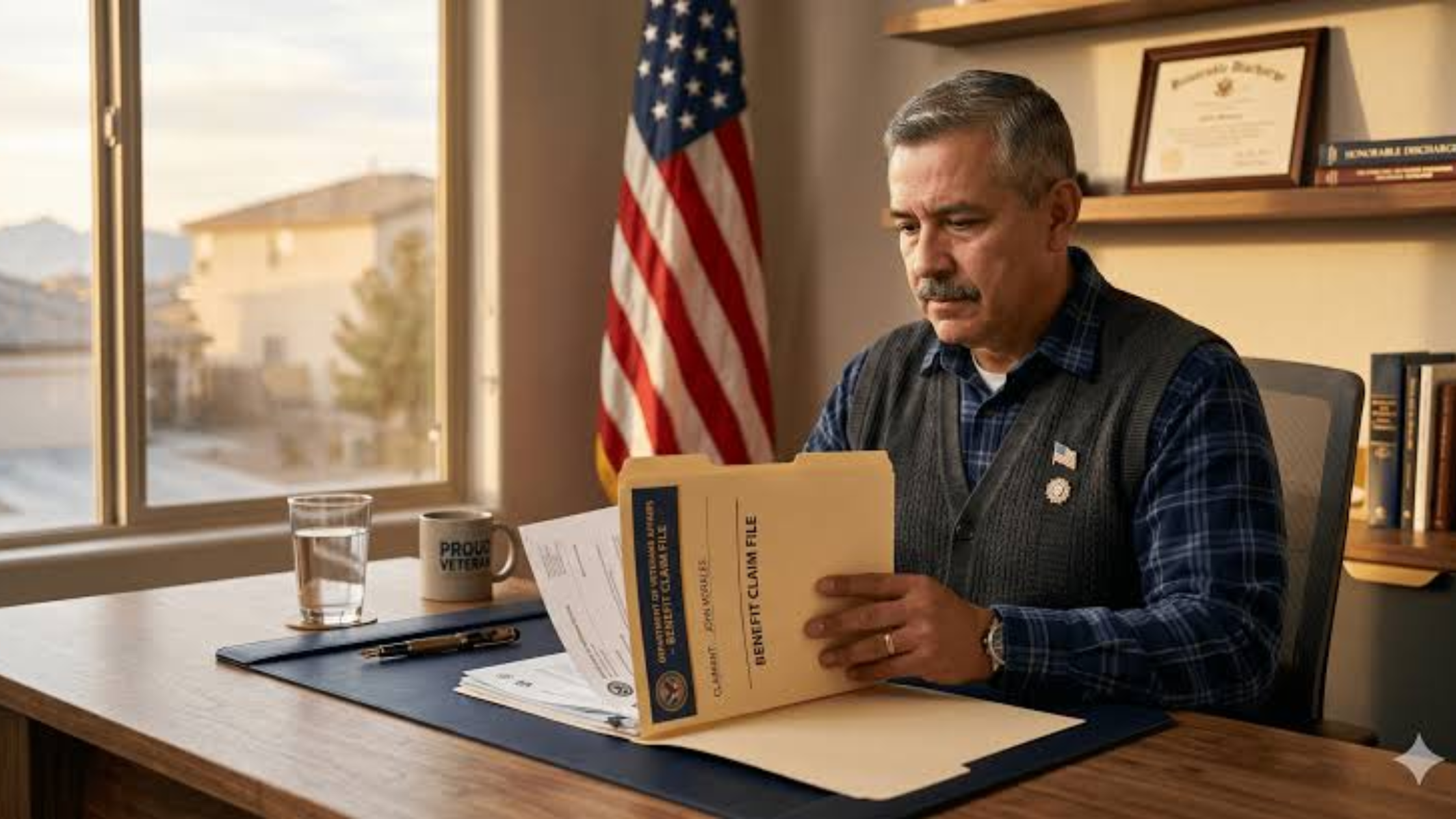
Filing a VA disability claim can feel like preparing for an exam when nobody has handed you the study guide. You know what happened during your military service. You know how your condition affects your life today. But translating those experiences into the documentation the Department of Veterans Affairs needs to evaluate a disability claim can be an entirely different challenge.
One of the most common questions veterans face is straightforward: What documentation do I actually need to file a VA benefits claim? The answer depends on the type of claim you’re filing, but understanding the evidence requirements before you begin can help you avoid unnecessary confusion, identify gaps in your records, and present a clearer picture of your disability.
Let’s break down what matters, what veterans sometimes overlook, and how to prepare a stronger, more organized claim.
Understanding the Three Building Blocks of a VA Disability Claim
Before gathering documents, it’s important to understand what the VA is looking for.
For a typical original disability compensation claim based on direct service connection, the evidence generally needs to establish three things:
- A current disability: Medical or other acceptable evidence showing that you have a physical or mental condition.
- An in-service event, injury, or illness: Evidence that something happened during qualifying military service.
- A connection between the two: Evidence linking your current disability to your military service, commonly called a nexus.
These requirements aren’t identical for every claim. Certain presumptive conditions, secondary disabilities, and other circumstances have different evidence rules. However, understanding these three elements provides a useful starting point.
The VA explains the requirements for different claim types in its official Evidence Needed for Your Disability Claim resource.
The key takeaway: A collection of medical records isn’t necessarily the same thing as a well-supported claim. The evidence needs to address the specific requirements for the benefit you’re seeking.
(1) Military Service Records: Establishing Your Service History
Your military records help establish when, where, and under what circumstances you served.
Depending on your claim, useful documents may include:
- DD Form 214 or other separation documents
- Service treatment records
- Personnel and assignment records
- Deployment or duty-location documentation
- Records of injuries, incidents, or medical treatment during service
These documents can help establish important details about an injury, exposure, event, or period of qualifying service. For example, a veteran claiming a condition related to a particular deployment may need records establishing service in a qualifying location. Another veteran may have medical records documenting treatment for an injury sustained during active duty.
What if your military records are missing?
Missing records can complicate a claim, but they don’t automatically make it impossible.
Veterans can request military service records through the National Archives. In some cases, particularly when records were destroyed or never properly documented, other evidence may help establish relevant events. The VA also recognizes that certain records were lost in the 1973 National Personnel Records Center fire and provides guidance on reconstructing affected service histories.
Don’t assume a missing document means your claim has no chance. Identify what’s unavailable, explore replacement records, and determine whether other evidence can help support the facts.
(2) Medical Records: Showing the Condition and Its Impact
Medical evidence is often central to a VA disability claim.
Depending on the condition, relevant documentation may include:
- VA treatment records
- Private physician records
- Hospital discharge summaries
- Diagnostic imaging and laboratory results
- Specialist evaluations
- Medical opinions
- Treatment histories and prescribed medications
But simply proving that a condition exists may not be enough.
For many original claims, the VA also needs evidence connecting that condition to military service. A medical opinion may be particularly important when the relationship isn’t obvious from the available records. For example, a veteran may have a current back condition and records showing a back injury during service. A medical professional may need to evaluate whether the current condition is related to that earlier injury. For an increased-rating claim, the focus is different. The evidence generally needs to show that an already service-connected disability has worsened.
Don’t overlook private medical treatment
Veterans sometimes assume the VA automatically has access to every medical record. It doesn’t.
If you’ve received treatment from a private physician, hospital, or specialist, those records may need to be submitted or specifically identified so the VA can attempt to obtain them.
The VA’s standard disability claims guidance explains how it gathers federal and nonfederal records and what responsibilities veterans may have.
If your medical history spans several providers, creating a simple timeline of appointments, diagnoses, and treatments can make the evidence easier to organize.
(3) Buddy Statements and Personal Testimony: Evidence Beyond Medical Records
Not every service-related event is neatly documented. Some veterans never sought treatment during service. Others may have experienced symptoms that weren’t immediately recognized as part of a larger medical condition. That’s where lay evidence can become valuable.
A lay statement is a written account from someone with firsthand knowledge of relevant events or symptoms.
Depending on the circumstances, that person could be:
- A fellow service member who witnessed an incident
- A spouse or family member who observed changes after service
- A friend familiar with the veteran’s symptoms
- A coworker who witnessed difficulties performing certain tasks
- The veteran personally describing their experiences
For example, a former service member might describe witnessing an injury during deployment.
A spouse might explain how a veteran’s mobility, sleep patterns, or daily functioning changed over time. These statements can provide context that medical records alone may not capture.
Veterans can use VA Form 21-10210, Lay/Witness Statement, to submit supporting testimony.
What makes a useful buddy statement?
A strong statement should be specific, factual, and based on personal knowledge. Rather than saying, “His condition is severe,” a witness might describe particular limitations they’ve personally observed.
For example:
“Before his deployment, he regularly participated in family activities and had no noticeable difficulty walking. Since returning, I’ve observed him needing frequent breaks, avoiding stairs, and struggling with activities he previously enjoyed.”
The purpose isn’t to exaggerate or make medical conclusions beyond the witness’s expertise.
It’s to provide credible observations that help explain the veteran’s circumstances.
(4) Medical Nexus Evidence: Connecting the Dots
One of the most misunderstood parts of the disability claims process is the medical nexus.
A veteran may have a documented medical condition and a clear military service history but still need evidence establishing the connection between them. A medical nexus opinion is an assessment from a qualified medical professional addressing whether a current condition is related to military service or, in a secondary claim, to another service-connected disability. A useful opinion generally explains the medical reasoning behind its conclusion and considers the relevant history and evidence. However, not every claim requires a privately obtained nexus letter. The VA may obtain a medical opinion through a Compensation and Pension (C&P) examination, and certain presumptive claims don’t require veterans to prove the usual direct medical connection. Before spending money on an independent medical opinion, determine what evidence your particular claim actually needs.
The goal is to address an evidence gap, not simply accumulate more paperwork.
(5) C&P Examinations: Why They Matter
After a claim is filed, the VA may schedule a Compensation and Pension examination to gather additional medical information. A C&P examination isn’t necessarily the same as a routine medical appointment. Its purpose is to help the VA evaluate the claimed condition, its severity, or its relationship to military service. Depending on the disability, an examiner may review medical history, perform an examination, document symptoms, or provide a medical opinion.
Veterans should:
- Attend scheduled examinations or promptly contact the VA if rescheduling is necessary.
- Describe symptoms and functional limitations accurately.
- Be prepared to explain how the condition affects everyday activities.
- Avoid minimizing symptoms out of habit or exaggerating their severity.
- Make sure the VA knows about relevant treatment records.
A C&P examination is one part of the evidence-gathering process, not an automatic guarantee of approval or denial.
You can learn more about the examination process through the VA’s claim exam guidance.
Different Claims Require Different Evidence …
One of the biggest mistakes veterans can make is assuming that every disability claim follows exactly the same evidence requirements. Consider these examples.
- Original Disability Claims
Typically require evidence of a current disability, an in-service event or illness, and a connection between them.
- Increased-Rating Claims
Focus on whether an already service-connected condition has worsened. Updated medical records and credible descriptions of increased limitations may be important.
- Secondary Service-Connected Claims
Require evidence of a new disability and its relationship to an existing service-connected disability. Medical evidence or opinions may be needed to establish causation or aggravation.
- Presumptive Disability Claims
For certain qualifying conditions and service circumstances, the VA presumes the connection to military service. Veterans generally still need evidence of the qualifying condition and the service history that establishes eligibility for the presumption.
- Supplemental Claims
When challenging a previous VA decision through a Supplemental Claim, veterans must identify or submit new and relevant evidence. That means evidence not previously considered that tends to prove or disprove something important to the claim.
Before submitting anything, identify which type of claim you’re filing and review the VA’s specific evidence requirements.
For official filing instructions, visit the VA’s How to File a VA Disability Claim page.
Final Thoughts: A Stronger Claim Starts With Understanding the Evidence …
Filing for VA disability compensation shouldn’t feel like a guessing game. Yet for many veterans, the most difficult part isn’t describing what happened during military service. It’s understanding how to document those experiences in a way that satisfies the VA’s requirements. The good news is that veterans have options … Medical records, service documentation, personal statements, witness accounts, and VA examinations can all play a role in establishing eligibility. The important part is knowing which evidence applies to your circumstances and what it needs to demonstrate.
A stronger claim isn’t necessarily the one with the most paperwork. It’s the one that clearly addresses the facts the VA needs to evaluate.
Taking time to understand those requirements can help veterans approach the claims process with greater confidence and fewer unanswered questions. And if you’re unsure where to begin, you don’t have to navigate every step alone. An accredited Veterans Service Organization representative, claims agent, or attorney can help you understand your options.
Have More Questions About Your VA Benefits?
Understanding claim documentation is only one part of navigating the VA system. Visit the DisabledVeterans.org Frequently Asked Questions page for practical information about disability compensation, claims, appeals, employment, financial assistance, and other concerns affecting veterans and their families.
Know what you’re filing.
Understand the evidence.
Advocate for the benefits you’ve earned.