
A New Lifeline: Washington Secures Federal Funding to Strengthen Veteran Suicide Prevention
Every day in America, an estimated 17 veterans die by suicide.
That’s more than 500 each month, and over 6,000 every year — a number that has remained stubbornly high despite decades of awareness campaigns, crisis-line expansions, and policy reform.
But numbers alone don’t tell the whole story. Behind each statistic is someone who once put on a uniform, someone who served a mission, someone who mattered.
Now, there’s a new effort aimed at reaching those veterans before the crisis point.
Washington State has secured a $1.4 million federal grant to expand mental-health resources, bolster community programs, and strengthen crisis-intervention support for veterans at risk of suicide.
It’s a tangible step forward — not just in funding, but in how states are beginning to think differently about suicide prevention: earlier intervention, more connection, and deeper community roots.
The Alarming Reality Behind the Statistics
Veteran suicide remains one of the most persistent challenges in the U.S. mental-health landscape. Some of the most sobering data includes:
- 17 veterans die by suicide each day on average
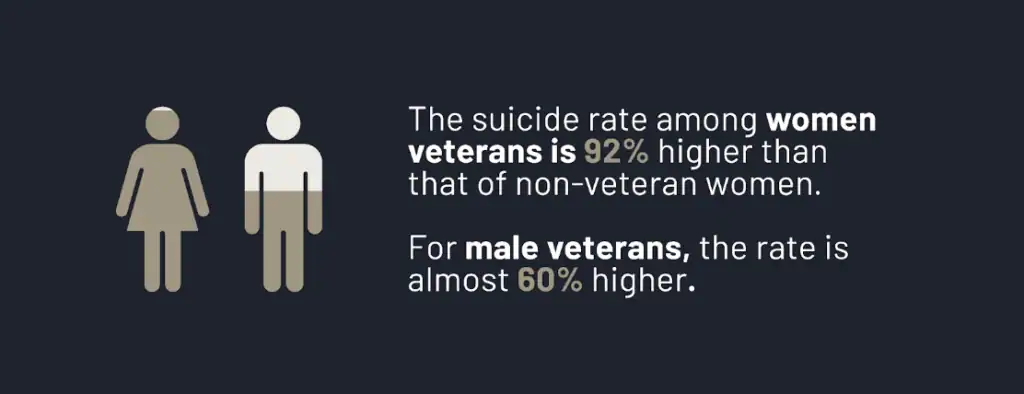
- Veterans are 57% more likely to die by suicide than non-veterans
- The risk is highest within the first three years after service
- Roughly 1 in 4 veterans report not receiving the mental-health care they feel they need
And the emotional weight of these numbers shows up in every corner of the veteran community — from rural towns to urban centers, from families quietly grieving to communities trying to make sense of the loss.
As one Washington State mental-health advocate noted:
“We can’t keep waiting for veterans to ask for help. The help has to go to them.”
That philosophy is exactly what this new grant aims to support.
What Washington’s New Funding Will Do
The $1.4 million grant is part of a larger initiative to expand Zero Suicide programming across the state — a model built on the belief that suicide is preventable with the right supports in place. The funds will be used to:
- Train community mental-health providers in veteran-specific crisis response
- Strengthen peer-support networks, especially in rural counties
- Expand partnerships between the state, the VA, nonprofits, and tribal veteran programs
- Improve early-warning systems for veterans who show signs of increased risk
- Increase access to culturally competent, trauma-informed care
Many of these measures are designed not only to respond to crises, but to prevent crises from forming in the first place.
A local veteran advocate put it simply:
“Connection saves lives. The earlier we build that bridge, the stronger it becomes.”
Why State-Level Action Matters …
While national entities like the VA and the DoD play critical roles, states are often the first responders when it comes to mental-health access.
State-level programs can:
- Reach veterans who aren’t enrolled in VA care
- Support families and spouses directly
- Connect veterans with community organizations faster
- Reduce regional access gaps in therapy, crisis care, and peer support
Washington’s new funding underscores a growing national recognition: supporting veterans means supporting the ecosystem around them, not just the federal systems they navigate.
A Shift Toward Proactive Prevention
One of the boldest aspects of Washington’s initiative is its emphasis on proactive mental-health care, not just reactive intervention. This includes:
- Screening veterans earlier
- Training first responders to recognize subtle warning signs
- Embedding mental-health professionals in community spaces
- Encouraging peer mentors to stay connected long before crisis occurs
The principle:
Catch struggle early. Reduce isolation. Build trust. Repeat.
This mirrors what many veteran advocates have been saying for years — that the most dangerous part of suicide risk is often the silence before the crisis.
Final Thoughts …
The fight against veteran suicide has never been about a single program, a single hotline, or a single moment. It’s about building a network of support sturdy enough that no veteran slips through unnoticed — or unsupported.
Washington’s new grant doesn’t solve the problem. But it does something equally important:
It signals momentum.
It strengthens community.
It invests in connection before crisis.
And connection, as we’ve seen again and again, is one of the most powerful protective forces a veteran can have.
As we continue to track programs like this, one truth remains clear:
Every life saved is a victory — and every step toward prevention is a step worth taking.




I am a 75 yr old, female Veteran 100% service-connected, war-time disabled! Living in an RV in my driveway,
for the past 4 yrs., a ‘list’ of orthopedic issues (MRI verified) none of which has the VA addressed, over the last 30 yrs! I’ve begged for help! I get 5mg. Oxy’s, and I’m in constant fear of losing even that! My scooter ‘died’ a year ago, went thru the whole gambit (Occup. Therapy) and over 2 years later I still don’t have a replacement for my 14 yr. old inoperative (unrepairable, tried); can’t get the dental work I need no one will accept VA payment! (or Humana the ONLY Medicare Advantage prog. available in my zip).
Please, don’t tell me to ask for help! I have. Local VA service rep., US House Rep., American Legion, lifetime member of DAV and Amvets, join Vietnam Veterans, they didn’t help either!!
All the ‘talk’ is about giving people ‘choice’; in schools for kids, health savings accts., How about giving veterans choice?? Tricare, Champus, the vet. pays according to disability rating or income scale!!
They deny veterans decent healthcare by cutting services and hiring bottom of the barrel Drs because they don’t pay fair wages and then expect sick and hurting veterans to to be happy and productive? Congress needs to wake up but it’ll never happen.
First and foremost there IS NO SHOOTING CRISIS in America PERIOD, more people are killed with cars, ladders, golf clubs, knives than by guns this notion of shooting is a issue created by the bias press, idiots. disarming citizens is not a solution at all, did it stop shooting in Sidney, NO. Disarming the citizens is what took place with Hitler, Stalin, Pol Pot, Khmer Rouge millions were massacred, Armed citizen keeps America Free, will the police, FBI, CIA, trun in their guns if not why should we? Tell the victims of the Holocaust they should not have turned their guns into Hitler or do you believe that the Holocaust never took place, millions upon. millions have died because they could not defend themselves, Centuries of HISTORY says that! When te citizens is armed you have freedom when the goivernme3nt owns all the guns you have tyranny. Six Supreme Court ruling have clearly stated that the POLICE cannot ever defens you or your family only you can do that, what happens when the guns are no more.
again tis statement is the problem that no one wants admit to, the VA wastes money on programs and hires people that do not understand or know what the proper resolve is to us Veteran suicides. all their so called attempts provide NOTHING they do NOTHING why because all they and others do is talk to hear themselves speak they could care less about the veterans they just speak to convince the general public that they are doing so much for the veteran than they actually do while just doing nothing
If they really wanted to prevent Veteran Suicides, Antidepressants that induce Suicides would be banned instead of being approved for the f.d.a and creating the Mass Sh**ting Crisis in America.
“Exploring the Relationship Between Medication and Veteran Suicides”
111th Congressional Hearing
111th Congress
Pages 63 and 96
All true!
It’s a shame we can’t use the government research already documented and hidden from America by Tim Walz and Senator Patty Murray for the past 17 years. .
“Exploring the Relationship Between Medication and Veteran Suicide”
111th Congress
(Pages 63 and 96)
and
“The Truth About Veterans’ Suicides”
110th Congressional Hearing
(Pages 81 and 110)
American Taxpayers spent Billions over the past 35 years. They deserve an answer to this burning question, “What’s the status of the Vietnam Veterans VA Mental Health volunteered for PTSD Drug Research (H.R. 841) in 1991?
It’s a shame we can’t use the government research already documented and hidden from America by Tim Walz and Senator Patty Murray for the past 17 years. .
“Exploring the Relationship Between Medication and Veteran Suicide”
111th Congress
(Pages 63 and 96)
and
“The Truth About Veterans’ Suicides”
110th Congressional Hearing
(Pages 81 and 110)
American Taxpayers spent Billions over the past 35 years. They deserve an answer to this burning question, “What’s the status of the Vietnam Veterans VA Mental Health volunteered for PTSD Drug Research (H.R. 841) in 1991?